Posts

Showing posts with the label Reading

Week 13 Reading: English Tales Part B

Image
 For the second part of the English Tales section I am taking notes on the story "Fairy Ointment" Illustration by John D. Batten (1890) Story A midwife is hired by a weird little fella with squinty eyes to come take care of a baby. The guy takes her to the house on a black horse with red eyes that moves insanely fast. When she gets there, there are a few other children and a mother in bed. She takes the baby and is told to rub a special ointment on its eyes the second he opens them. She does so. Curious as to what the ointment is meant to be, the midwife waits until nobody is looking and rubs some on her right eye. Immediately, the room transforms into a beautifully furnished place, the children turn into mischievous things with pointy ears and the woman is more beautiful than ever. These are pixies.     Eventually, the wife is good and the midwife is taken home. The next day she goes into market and sees the pixie taking things from the stalls but nobody notices. Wantin...
Week 13 Reading: English Tales Part A

Image
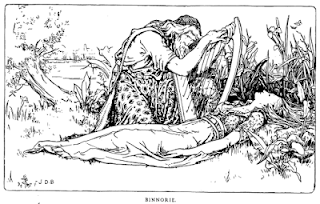
 For the first part of the English Tales section, I am taking notes on the story Binnorie. Illustration by John D. Batten (1890) Plot      Two princesses live near the bonny milldams of Binnorie. A man comes along and woos the elder sister. However, he eventually falls for the younger sister and leaves the eldest for her. Dramaaaa. The eldest sister blames her and hates her for it.     One day, the eldest suggests that they go down to the millstream and watch their father's boats. When they get there the eldest sister pushes the younger one into the water. The younger sister begs for help. The eldest sister denies her help because she hates her and anything she could be given in return would be hers if her sister died anyway.     The younger sister drowns. A miller and his daughter pull her body out of the water after the daughter saw her floating. A harper walks by and notices the beautiful woman. One day, he comes back and makes a harp from her...

Week 12 Reading: Celtic Tales Part B

Image
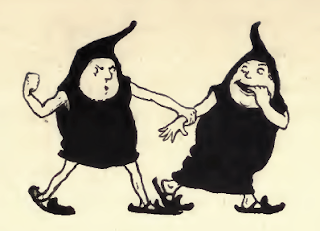
 For part B of the celtic tales section, I decided to take notes on Brewery of Eggshells. Illustration from Celtic Fairy Tales by John D. Batten (1892)  Plot This story is pretty short and simple. A mother has twins. She is one day called away to visit a neighbor rather far away. Although she doesn't want to, she leaves her children alone at home. She rushes back as soon as she can. She rushes even faster under worry when she sees a pair of "old elves of the blue petticoat" in the street. Her children were fine in their cradle. Over time, however, the twins did not grow. Their father proclaimed that they were not their children. Distressed, the mother went to the Wise Man of Llanidloes. He told her to cook and egg shell and offer it as dinner to the reapers (I'm not sure if this is the children or someone else). If the children say weird stuff for a child, toss them in the lake. If not, leave them be. The mother does so and the children say a weird rhyme: Acorn before...

Week 12 Reading: Celtic Tales Part A

Image
 For week 12 part A, I am taking notes on the story of Munachar and Manachar. Because of the nature of the story, these notes are a bit different than my usual notes. Illustration from Celtic Fairy Tales by John D. Batten (1892) "Plot" A manachar and a munachar go out to pick raspberries. As soon as Munachar would pick a berry Manachar would eat it. This pissed Munachar off and he wanted to kill Munachar. So, he decided to find a rod to make a gad to hang manachar. This began a sequence of requests. Rod needs axe to cut him Axe need flag to edge him Flag needs water to wet him Water needs deer to swim in him Deer needs a hound to hunt him Hound needs butter Butter needs a cat to scrape it Cat needs milk from cow Cow needs a whisp of straw from threshers Threshers need cake from miller Miller needs water from river Munachar tries to get the water with a sieve but it doesn't work. A crow comes by and "duabs". Munachar thanks the crow and daubs the sieve with clay ...

Week 11 Reading: Southwestern Native Americans Part A

Image
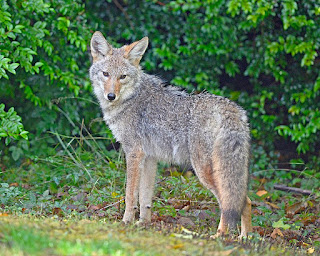
 For this week's reading from part A I am taking notes on the first story, a collection of creation myths. Creation and Longevity In this creation myth from the Achomawi (Pit Rive, California), a coyote is the central character responsible for much of what we have today. The coyote scratched up the Earth from nothingness but eagle was mad there were no mountains. So coyote made some hills. They weren't tall enough so Eagle scratched up big ridges. While flying feathers fell from Eagle and these became trees, bushes and plants. Then coyote worked with fox to make man. Coyote said let them die and fox said let them live forever. In the end, coyote's stuff was stronger and people die. The natives were cold so coyote went to a place far west and stole fire. He kindled the fire up in a mountain. Upon seeing the smoke, the natives went to get it. Old Mole and Coyote This is a creation myth from the Shastika of California. Somewhere, old mole dug and threw up Earth and on this Ear...

Week 9 Reading Notes part B

Image
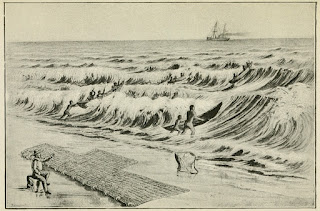
    These are notes on the story, The Fetish Sunga , for part B of week 9 reading. (fishing on the sea coast; sketch by Dennett  from the book) Plot     A selfish man hides the fish that he catches at the river. He lies to anyone who asks him about it and says he has no fish. A fetish, named Sunga, watches all of this and is very disappointed in his lies. One day, while catching more fish than he has ever caught, Sunga sends her daughter to fetch the man. He follows her along the river, which has dried up to provide a road, to a wonderful town at the river's water shed. There, Sunga makes him partake in a great feast and drink lots of wine that removes his ability to speak. Now, he can no longer lie to people and must use signs to communicate. Thoughts     I don't really understand what the guy's goal was in hoarding the fish. The story said he had so much some of it was rotting. I guess he was just weird and selfish. He's clearly not prideful or ...

Week 9 Reading Notes Part A

Image
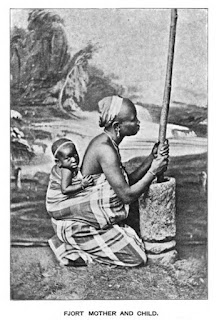
   I chose to take notes on How Kengi Lost Her Child  for this weeks first reading. ( Photo from the source book ) Plot This is a really simple plot. Two women have land split between them by their shared husband. One day one of the woman takes some beans from the other woman's farm. The second woman is very cross about this and demands that they set some ground rules. They agree that everything birthed on their land belongs to them and the other has no claim to it. Life goes on. One day the second woman comes to the first woman for some tobacco to help aid her pains. She sit on the woman's land and smokes. She gives birth to a baby. The first woman claims the baby as her own and they argue. They go to a town to have the dispute settled. The prince decides that the first woman is acting within her rights because of the agreement they made. The baby is hers.  Characters There's not much to say about characters here. It's a short story. I get the feeling that the secon...

Reading Notes: Filipino Tales Part B

Image
( Cuttlefish ) I don't actually know why this story stood out to me, but it did. I liken it to some kindergartners being put in a very severe timeout.  Story Bathala (supreme Tagalog being) created all the fish in the sea. He declared that the fish should have a meeting to designate officer roles. Every fish showed up on time except for the cuttlefish and the squid. They wait a bit but they don't show up. Bathala designates stingray as sergeant at arms, crocodile, cadaver carrier, and crab, soldier. Then, the missing two show up and interrupt Bathala. Bathala scolds them and they run off. They decide to collect mud to throw at the officers. When they return, they ask for a job. Bathala only scolds them. They throw their mud. Bathala is furious and curses them to carry pouches of mud forever. This is why they are slow and have ink today. Bathala also cursed squids to never grow because he found the squid most annoying.  Bibliography. Cuttlefish and Squids  from Filipino Po...

Reading Notes: Filipino Tales Part A

Image
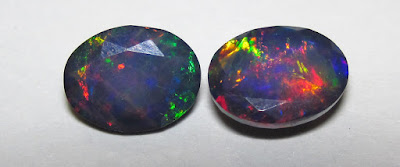
      Black Opal (photo by James St. John on Flickr ) The story that stood out to me was the tale of the Three Brothers of Fortune. I think it stood out because it reminded me so much of the deathly hallows tale from Harry Potter. Perhaps Rowling took inspiration from this story. Plot     A wealthy man sends his three sons off to school. They party and don't learn anything while there. The three sons are ashamed of this and refuse to go home. Instead, they wander through towns seeking their fortune. They come upon an old lady who offers them a magic resurrection book for purchase. The first brother purchases it. They next come upon an old lady offering up a magic mat that can transport you wherever. The second brother purchases it. They come upon a set of magic stones that can be used to reassemble things. The third brother takes this. Happy with each of their magic charms, they continue wandering. They happen upon a crowd grieving over a dead body. Th...

Reading Notes: Voyages of Sindbad Part B

Image
  (Illustration by H.J. Ford)      Well, he didn't die. I guess that makes sense if he's the one telling the story. At least he eventually learned his lesson and lost the urge for adventure. For these notes I focused on Sindbad's final voyage. Plot     Sindbad gets called in by the Caliph and told that he needs to deliver some gifts to the king he met from his last voyage. Sindbad tries to refuse but can't. He travels to the Serendib without any hiccups. The king keeps him there for a bit, but he eventually sends him back home. Sindbad travels for four days without issue. On the fifth day, his ship is attacked by pirates. He is captured and sold off as a slave.     His slave master charges him with killing elephants with a bow and arrow for their ivory. Sindbad is successful. Each day he climbs into a tree and kills and buries an elephant as they pass by. One day, the elephants don't pass by. They surround Sindbad's tree and uproot it. Sindbad is ...

Reading Notes: Voyages of Sindbad Part A

Image
(Illustration by H.J. Ford) Sindbad, the sailor who just doesn't learn to quit. I mean come on man. I haven't read part B yet but there is no way you make it out of this alive, buddy. Hang it up, Sindbad. Anyway, I focused on Sindbad's second voyage for these notes. Plot     Sindbad decides life is dull and he wants to go out and be a merchant again. He heads out and ends up on an uninhabited island. While his companions gather fruit and flowers, Sindbad chills in some shade and falls asleep. His shipmates forget about him and leave him stranded there. Realizing they're not coming back for him, he gets to work on trying to get home.     He climbs a big tree and spots a dazzling white object in the distance. He goes to it and finds it is a giant Roc's egg. The bird descends down onto its egg to keep it warm. Sindbad hides and ties himself to the bird's leg. In the morning, the bird flies off into the sky, high above the clouds. The bird dives down into a ravine a...

Reading Notes: Arabian Nights Part B

Image
      In the second part of this week's reading, I read the story of Aladdin and the Wonderful Lamp. It was a much different tale from the Disney version. Although, it did still make me want to watch the original Disney Aladdin.  (Illustration by H.J. Ford, 1898) Plot     This was a long story. So, I'm going to try to summarize the major plot points very briefly.      Aladdin is a lazy son of a poor tailor. He's so lazy that his father dies from the grief of it. One day, while Aladdin is playing outside, a magician approaches him and says he is his uncle. Aladdin runs home and tells his mom and the magician woos the family. He takes Aladdin under his wing. Eventually, he takes Aladdin to this spot between two mountains. He throws some magic powder on a fire and a door appears from the earth. He gives Aladdin a ring. Aladdin is made to open it and descend down to retrieve the lamp for the magician. He picks some special fruit along the way. Wh...

Reading Notes: Arabian Nights Part A

Image
The Merchant and the Genie        The Merchant and the Genie ( Illustrated by H.J. Ford, 1898 )      Wow! Turns out Christopher Nolan is an amateur. I really liked reading the story within the story within th story. I kept anticipating the  Inception "drop" in each tale that would kick back to the one before it. It definitely helped hold my interest. My only wish is that there was a bit more information about  Scheherazade and the sultan as the stories were being told. The reality of her stalling with the stories gets a bit lost. That may just be because of the way I'm reading them as separate stories.      My favorite one of  Scheherazade's tales was the very first, the genie and the four men. I'm choosing to tie all of the men's stories and Scheherazade's into one story for my writing assignment. This is for the sake of simplicity, although I'm sure that's not the right word, when rewriting.  Plot    ...

Reading Notes: The Iliad Part B

Image
    The section of the Iliad that most stood out to me today was The Slaying of Hector. Contrary to my favorite part of part A, this section is full of action and suspense. Who is going to survive? How will they manage to kill their opponent? Which god will intervene next? It was great fun to read. Plot      The plot for this sections is fairly simple. The Greeks are winning the battle thanks to Achilles reentering the field. The Trojans are retreating into the city. The Greeks would have won the battle at this time if it were not for some divine intervention on Apollo's part. In order to give the Trojans time to escape, Apollo instills great courage into Agenor and gives him a spear. Agenor stands his ground at the gate and spears Achilles when he approaches but the spear just bounces off Achilles' armor. Achilles charges Agenor. Apollo lifts Agenor to safety and then takes his form. Apollo, now Agenor, leads Achilles on a chase long enough to get the Trojans t...

Reading Notes: The Iliad Part A

Image
      I read section A of The Iliad for the first reading assignment this week. The portion of this first half of The Iliad that stood out to me was The Quarrel. I like the smaller scope of this section. Rather than use a large battle with action and fight sequences, this section of the story tells its tale in two simple locations primarily through dialogue. It is a tense and dramatic scene of a subordinate rising up against and abandoning his commander. It sets up the coming battle so well and really makes you hate Agamemnon.      Plot     The Greeks take the city of Chryse and divide the spoils among themselves. Agamemnon was given a girl named Chryseis, the daughter of the priest of Apollo for the city. Because, you know, women are objects that you can just take and give to each other. Anyways, the priest comes to Agamemnon with a bunch of gold to buy his daughter back. Agamemnon, ever the dick that he is, tells the priest to go away and don't ...

Reading Notes: Jewish fairy tales Part B

Image
A Sculpture of a man-like Golem ( Wikimedia Commons )     The story that stuck out the most to me in section B of Jewish fairy tales was The Rabbi's Bogey-Man . Alternatively, you could use the name I will forever use in my head Jewish Frakenstein . I love the story of Frankenstein. The ideas of what humanity is and the questions of morality that Mary Shelly proposes in that story are great. Those same questions are asked in this short fairy tale.     The basic plot of The Rabbi's Bogey-Man  is as follows. A local rabbi is too smart for his own good. The other townspeople are afraid of him because he practices chemistry and they see it as him practicing witchcraft. The rabbi can't find any help because everyone is afraid of him. "Fine then. If it's a magician they want, it's a magician they'll get." he says. The rabbi then builds a woman and brings her to life with the secret name of God. It's great to start with but the rabbi quickly learns that i...

Reading Notes: Jewish fairy Tales Part A

Image
                    ( Etching by Hendrik Hondius )      My favorite story from Part A of the Jewish Fairy Tales was The Quarrel of the Cat and Dog . I love that of all the things that someone could have taken the time to explain they chose to explain why cats and dogs don't like each other. It was endearing and fun to read.      The basic plot of the story is pretty simple. The cat and the dog start out as friends. They're having a grand old time and everything is great. Then, winter comes around and suddenly food and warmth starts to get scarce. The cat decides that they would be better off if they separated because they could each hunt for their own food instead of sharing. The dog initially goes against this idea but gives in. The cat decides that it will go live in Adam's house and hunt mice. The cat then makes the dog swear to never cross paths with it again. The dog agrees and they separate. ...

Reading Notes: Week 2 Anthology

Image
Beauty and the Basilisk For this first week, I am taking notes on  The Key of Gold by Josef Baudis (1922). This story primarily interested me because I love the different approach to the beast. No long imprisonment and true love necessary. Just feed him for a few days and then cut off his head a couple times and you're good. I mean the whole "bring me your daughter" is still creepy. I'm sure there is definitely some level of Stockholm syndrome at play with the nursing but, overall it seems marginally better.  Basilisk by Friedrich Johann Justin Bertuch (1747-1822). Basic Plot     In this story, a mother goes out to a market in a town nearby. She asks her three daughters if they would like anything. Her two superficial daughters ask for a myriad of gifts. Her third daughter ask only for three roses if it is possible and not inconvenient. As she is returning from the market with the large load of items, she gets lost and stumbles upon a castle with a rose garden. She...

Week 2 Reading Overview

Image
Tentative Reading Plan Choose from CLASSICAL and/or BIBLICAL units for Weeks 3 and 4. Week 3: Jewish Fairy Tales Week 4: Homer's Iliad Choose from MIDDLE EASTERN and/or INDIAN units for Weeks 5 and 6. Week 5: Arabian Nights Week 6: Sindbad Choose from ASIAN and/or AFRICAN units for Weeks 7 and 9. [Week 8 is review week.] Week 7: Philippines Week 9: Congo Choose from NATIVE AMERICAN units for Weeks 10 and 11. Week 10: California/Southwest Week 11: Tejas Choose from BRITISH and/or CELTIC units for Weeks 12 and 13. Week 12: Celtic Tales Week 13: King Arthur Choose from EUROPEAN units for Weeks 14 and 15. Week 14: Inferno  Week 15: Lang I Reasoning     I chose a large chunk of these stories and collections because they are classics that I know I should have read by now but I have just never got around to them. By assigning them to myself, I'll finally read them and hopefully have a greater understanding and appreciation for some extremely influential pieces of literatu...